

Renting a Car in Phuket: Safety, Rules, and What Tourists Should Know

phuket traffic conditions
So, is it safe to rent a car in Phuket? In most cases, yes – and for many travelers it is often a safer option than using a motorbike. The answer depends on a few conditions being in place before the trip starts: proper driving documents, valid insurance, a well-prepared vehicle, and a realistic understanding of local roads.
That matters because driving in Phuket as a tourist is not only about traffic skill. Safety also depends on legal protection, rental terms, and how clearly the handover is handled from the start. In this guide, we break down the traffic environment, insurance logic, required documents, and the rental details that make car hire in Phuket feel predictable rather than risky.
Safety & Traffic in Phuket: What Tourists Should Realistically Expect
People often ask “Is driving in Phuket dangerous”, but the better question is what actually creates the pressure on the road. In most cases, the issue is not the rental car itself. It’s the surrounding traffic. Phuket traffic conditions can feel dense and uneven, especially in tourist areas where cars, scooters, vans, and tuk-tuks move at very different speeds.
The roads are not extreme, but they demand attention. You’ll see narrow coastal stretches, hill sections where traffic slows suddenly, and scooters moving through gaps that a visitor might not expect. Lane discipline can feel loose compared with Europe or the US, and quick U-turns are common on larger roads. That mix is what makes driving feel intense at first.
Common Road Situations Tourists Encounter in Phuket:
- scooters passing between lanes;
- steep hill sections with slow traffic;
- sudden U-turns on main roads;
- mixed traffic (cars, bikes, tuk-tuks);
- congestion near beaches and markets.
The practical takeaway is simple: patience matters more than confidence. Defensive driving, lower speed, and extra mirror checks do more for safety than trying to match the local rhythm.
Documents That Protect You: License, IDP, and Insurance Validity
driving in phuket as a tourist
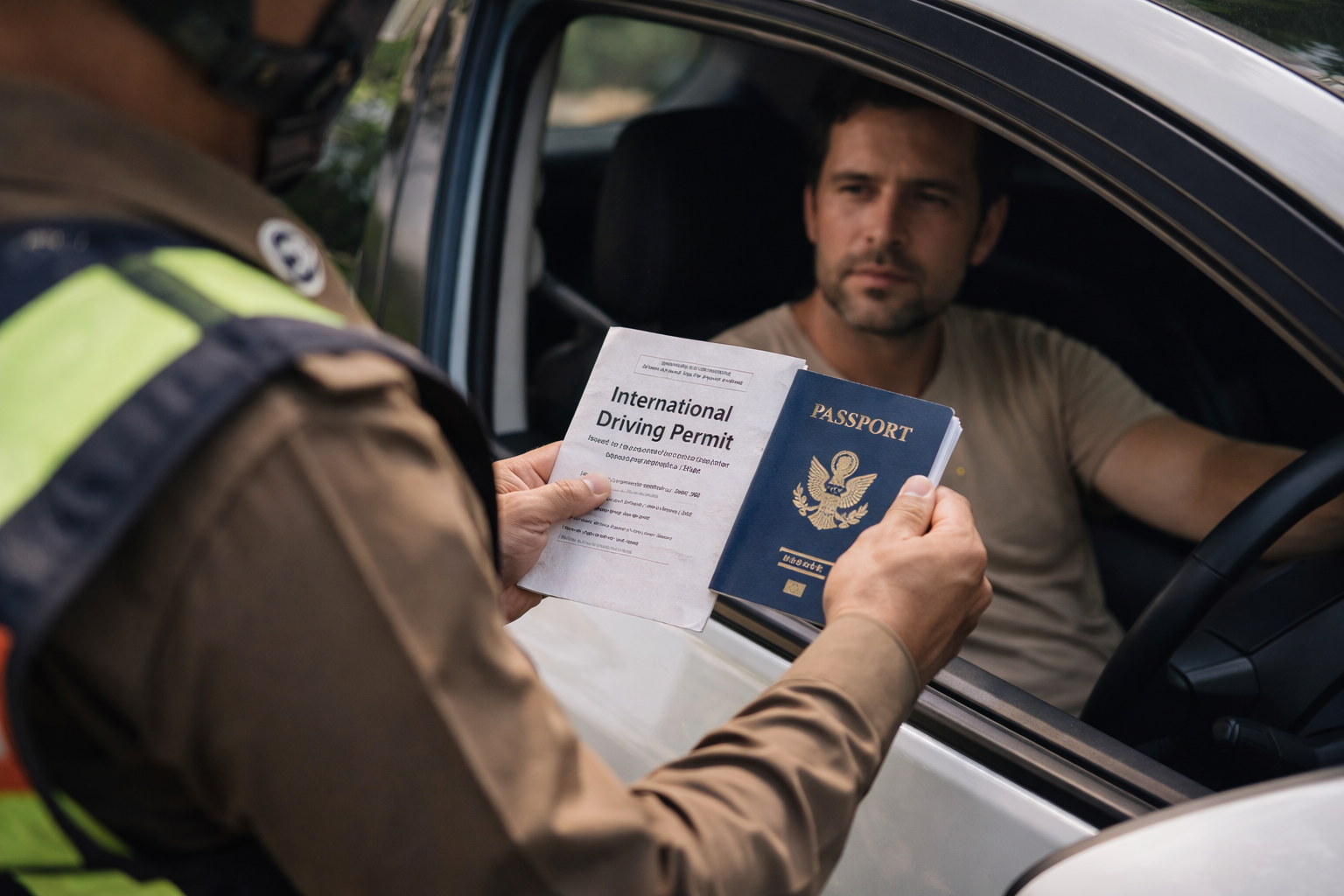
One of the least visible risks in car rental has little to do with the road itself. The bigger issue appears when drivers do not carry the documents that make their insurance legally valid. This detail is easy to overlook when driving in Phuket as a tourist, yet it can determine whether an incident becomes a manageable situation or an expensive one.
In Thailand, a valid national driving license is normally expected together with an International Driving Permit. Many insurance policies rely on this combination. If the required documents are missing, coverage may not apply even if the accident itself was minor. In other words, there is a difference between being allowed to drive and being financially protected while doing so.
Documents to Carry While Driving in Phuket
- valid national driving license;
- International Driving Permit (IDP);
- passport copy;
- rental agreement copy;
- insurance confirmation.
Keeping these documents accessible helps avoid complications during traffic checks or insurance claims. Proper documentation protects both your legal standing and your financial safety throughout the rental period.
Choosing the Right Rental Company Reduces Risk
Car rental safety often begins before the engine starts. In Phuket, problems are more likely to come from unclear paperwork or an undocumented vehicle condition than from the vehicle itself. A scratch that was never noted, insurance terms explained too late, or damage reports handled casually can all turn a simple rental into a dispute.
Reliable companies reduce that risk by making the handover structured. The condition of the car is checked, the agreement is clear, and the insurance terms are not left vague. That is what separates a predictable rental from one that feels uncertain. The next two sections explain what those signals look like in practice.
What Makes a Rental Agency Reliable in Phuket
A reliable rental agency is easy to recognize once you know where to look. The strongest sign is not branding – it is documentation. A clear contract, a recorded vehicle condition report, transparent deposit terms, and visible insurance options all reduce the chance of disputes later. A well-maintained fleet matters too, because maintenance is part of Phuket road safety, not just comfort.
From our side, the process stays documented from the beginning. We review the vehicle condition before handover, note existing marks, and go over the agreement with the driver before departure. That keeps the rental from depending on memory or assumptions later.
In practical terms, a professional agency reduces risk by handling details early. Problems are easier to prevent before the car leaves than to untangle after an incident or at return.
Understanding Car Rental Insurance in Thailand
Insurance is where rental safety becomes financial, not theoretical. A minor scrape or low-speed collision can stay manageable – or become expensive – depending on what type of cover is attached to the car. That is why understanding insurance matters before you drive, not after something happens.
Basic insurance usually covers third-party damage and offers more limited protection for the rental vehicle itself. First-class insurance tends to provide broader cover and lowers the driver’s financial exposure in an accident. Some providers also offer extended protection with extra conditions or a lower excess. The key point is simple: the stronger the coverage, the less personal cost the driver is likely to face if something goes wrong.
This matters for driving in Phuket as a tourist because road conditions can be unfamiliar even for careful drivers. Insurance does not remove risk, but it changes how much of that risk stays with you financially.
| Coverage Type | What It Typically Covers | Financial Risk Level |
| Basic insurance | Third-party damage and limited vehicle protection | Higher deductible |
| First-class insurance | Broader accident coverage and lower liability | Lower personal risk |
| Extended coverage | Additional protection depending on provider | Minimal exposure |
Driving Rules Tourists Must Know Before Getting Behind the Wheel
Many visitors assume the challenge is traffic volume, but hesitation usually comes from unfamiliar road logic. When driving in Phuket as a tourist, the most noticeable difference is that traffic moves on the left side. That single change affects how drivers approach intersections, roundabouts, and lane changes, especially during the first hours behind the wheel.
Speed limits are generally moderate, yet they are not always marked as clearly as in Europe or the United States. Mirrors become especially important because scooters often approach from angles that visitors may not expect. Turn signals are widely used, but drivers also rely heavily on visual awareness rather than strict lane positioning.
Another adjustment is learning how local drivers anticipate movement. Instead of rigid lane discipline, the flow often depends on mutual awareness and gradual positioning on the road.
Once drivers understand these formal rules and habits, the experience becomes much more predictable. Familiarity with the basic structure of the road reduces hesitation and helps drivers respond calmly to everyday situations.
Costs and Parking Realities: Convenience vs Challenges
phuket road safety
For longer stays, a rental car often changes how visitors move around the island. Individual taxi rides may feel inexpensive at first, but the cost adds up quickly when you repeat the same routes every day. A rental spreads that cost across multiple trips and gives families or groups the freedom to move on their own schedule. For many travelers, that flexibility becomes one of the main advantages of driving in Phuket as a tourist.
Parking, however, is the part that requires a little planning. Phuket’s busiest zones attract dense evening traffic, and available spaces can disappear quickly. The situation is manageable, but it helps to know where patience may be needed.
Areas Where Parking Is Most Difficult:
- Patong central streets;
- night markets;
- beach road areas;
- old town during evenings.
A car can significantly improve mobility on the island, but convenience depends on knowing where parking pressure tends to appear.
Practical Steps That Make Car Rental in Phuket Safer
Many rental problems can be prevented before the car even leaves the parking area. A few practical checks at the beginning of the rental reduce the chance of misunderstandings later. Most of them take only a few minutes but create clear documentation for both sides. The next steps focus on two areas that make the biggest difference: verifying the vehicle condition and preparing for everyday driving situations before the trip begins.
Inspect the Vehicle Before You Leave
A careful vehicle inspection is one of the simplest ways to avoid disputes after the rental ends. When the car’s condition is recorded clearly before departure, both the driver and the rental company share the same reference point. Small scratches or marks that go unnoticed at pickup can otherwise become confusing later.
Photographs are particularly useful because they capture details that written notes may miss. A quick set of photos around the car creates a clear visual record.
Car Rental Inspection Checklist:
- tire condition;
- headlights and indicators;
- mirrors;
- bumpers;
- windshield.
We review the vehicle condition together at handover and note any existing marks before departure. Taking photos from several angles adds an extra layer of clarity and helps both sides avoid uncertainty when the car is returned.
Navigation, Peak Hours, and Emergency Contacts
Preparation makes unfamiliar roads much easier to handle. Most drivers rely on navigation apps such as Google Maps or Waze, which work reliably across the island and help anticipate turns, one-way streets, and traffic buildup. These tools are particularly helpful when routes include smaller coastal roads or hill sections.
Timing also matters. Traffic near Patong, major beach roads, and market areas becomes noticeably heavier in late afternoon and evening hours. Planning trips outside these windows often makes driving calmer and reduces unnecessary delays.
Basic preparation also improves Phuket road safety. Keeping a local support contact available can help if a situation becomes confusing or stressful. Thailand’s Tourist Police hotline 1155 is available for assistance in English.
When navigation, timing, and support options are prepared in advance, driving becomes far more predictable, even on roads you are seeing for the first time.
When Renting a Car May Not Be the Best Choice
Although renting a car offers flexibility, it is not always the most practical option for every visitor. Travel style and driving confidence play a major role in whether a car actually improves the experience.
Short stays are one example. If the trip lasts only a few days and most activities are concentrated in one area, arranging taxis or ride-hailing services can be simpler. Visitors who plan to stay mainly in Patong often find that walking, local transport, or app-based rides already cover most daily movements.
Driving comfort also matters. Thailand uses left-side traffic, and for some drivers the adjustment takes time. If that change feels stressful, relying on transport services may be the better choice.
Ride-hailing apps such as Grab work across Phuket and allow quick booking without planning routes or parking. In those situations, skipping a rental can actually make the trip easier.
Rental Agreement Details Tourists Often Overlook
Many rental disagreements start with small details that receive little attention during pickup. Drivers often focus on the vehicle itself, while key conditions are written in the agreement. A few minutes spent reviewing these points can prevent confusion later.
Deposit terms are one of the most important. The agreement should clarify the amount, the payment method, and the conditions for its return. Fuel policy is another frequent source of misunderstanding – some rentals expect the car to be returned with the same fuel level, while others use different rules.
Mileage limits and return timing also matter. Late returns or unexpected distance limits may add charges if they were not discussed earlier. Pre-existing damage should always be documented clearly so both sides have the same record of the vehicle’s condition.
We explain these details before pickup so drivers understand the agreement fully before departure. Clear expectations make the rental process smoother and prevent avoidable surprises.