
Travel Insurance and Rental Car Accidents in Phuket: What Is Actually Covered?

travel insurance car rental phuket
Many travelers ask does travel insurance cover car rental in Phuket as if it were the main protection attached to the vehicle. In practice, it usually works differently. The rental company’s local car insurance remains the first layer, while travel insurance often deals with the excess or deductible after the local policy has already applied.
That distinction matters because travel insurance car rental in Phuket does not usually replace the rental-side cover, and it does not erase every financial risk. Coverage still depends on legal driving status, compliance with rental terms, and the specific type of damage involved. We explain what is covered locally and where outside travel insurance may still leave gaps, so the structure is clear before the discussion becomes expensive.
How Travel Insurance Works for Rental Car Accidents in Phuket
The most common misunderstanding is structural. In car rentals and insurance, travel insurance usually works as a second layer, not as the policy that replaces the rental company’s local cover. After an accident, the rental-side insurance responds first because that is the contract attached to the vehicle.
This is where the excess, or deductible, becomes important. In practical terms, it is the part of the damage cost that remains the renter’s responsibility under the rental agreement. Travel insurance may reimburse that amount later if the policy allows it. That is very different from paying the repair cost directly at the moment of the accident.
What Standard Travel Insurance Usually Covers
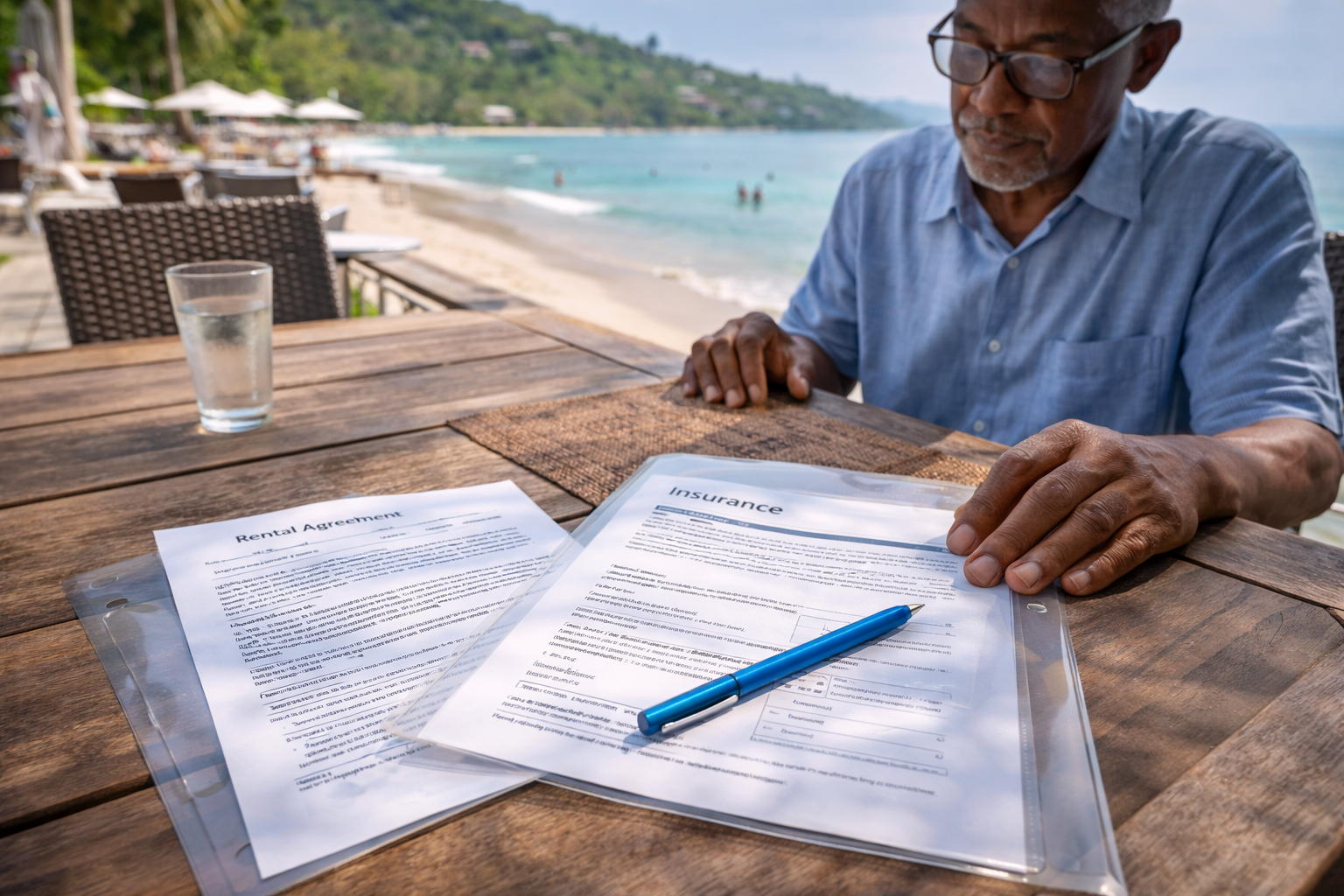
Standard travel insurance can soften the cost of an accident, but only within a fairly narrow frame. In the context of insurance when renting a car, policies often cover reimbursement of collision-damage excess, theft-related excess, and in some cases certain administrative charges linked to the claim. That sounds broad, but the actual scope depends heavily on the wording of the policy and the rental agreement.
Coverage usually assumes that the driver was legally entitled to drive, complied with local rules, and followed the rental contract. If any of those conditions are missing, the insurer may reduce or reject the reimbursement request. In other words, the protection exists, but it is conditional rather than automatic.
At handover, we clarify the local protection structure. Outside travel insurance, however, still depends on the traveler’s own policy terms and how the incident fits them.
What Travel Insurance Commonly Does NOT Cover in Phuket
does travel insurance cover car rental
The most costly mistake is assuming that “covered” means everything connected to the car. With travel insurance car rental in Phuket, that is often not the case. Many policies exclude damage to tires, windshields, and the undercarriage, along with certain problems that fall under wear-and-tear or breach-of-contract wording.
These exclusions matter more in Phuket than some travelers expect. Road edges can be uneven, small debris is not unusual, and minor contact damage happens more easily in tight parking areas or on narrow access roads. A policy may still leave these categories outside reimbursement even when the main accident-related claim looks valid.
Common exclusions travelers should check:
- tire damage;
- windshield damage;
- undercarriage damage;
- exclusions tied to contract breach.
This is where many travelers discover that coverage has practical boundaries. The policy may help with one part of the loss while leaving other costs with the renter.
Super Collision Damage Waiver (SCDW) and Full Protection Explained
SCDW changes the financial picture at the front end of the rental. Unlike travel insurance, which may reimburse eligible costs later, SCDW or full protection is usually added through the rental company and works directly against the excess written into the rental contract. That difference matters most in smaller accidents, where the main concern is not a large repair bill but how much the renter must pay immediately.
In simple terms, SCDW is designed to reduce or remove excess liability, depending on the agreement. Travel insurance, by contrast, often sits in the background and may only respond after the local claim process has already happened. For renters who want predictable out-of-pocket limits, that distinction is important.
| Protection Type | What It Usually Does | How It Affects Your Upfront Exposure |
| Standard rental cover | Applies first, but excess remains | Higher out-of-pocket risk |
| Travel insurance reimbursement | May refund eligible excess later | Delayed reimbursement, not primary cover |
| SCDW / full protection | Reduces or removes excess liability | Lower immediate financial exposure |
We explain how local protection and excess work before pickup, so the driver understands what remains their financial responsibility.
Third-Party Liability and Why It Matters More Than Tourists Expect
Many renters focus first on damage to the car they are driving. In practice, that is only one part of the financial risk. The larger exposure can begin when another vehicle, another person, or someone else’s property is involved.
Local rental coverage often includes some form of third-party liability, but that cover serves a different purpose from protection for the rented car itself. A damaged bumper on the rental vehicle is one question. Injury to another road user or damage to a more expensive vehicle is another, and the financial consequences can be much higher.
This is one reason car rentals and insurance should never be understood only through the lens of vehicle damage. Tourists tend to think first about the car they signed for, but liability starts where someone else’s loss begins.
Personal Accident Insurance vs Travel Medical Coverage
Personal accident insurance and travel medical cover can overlap, but they are not the same thing. Rental-company personal accident insurance usually addresses injury-related costs within the rental context itself. Travel insurance medical cover, by contrast, may already include treatment expenses under the traveler’s broader policy.
This is where duplication sometimes appears. A renter may pay for both types of protection without realizing that part of the medical risk is already covered elsewhere. That does not automatically make the extra layer unnecessary, but it does mean the wording of both policies matters more than the label attached to them.
In the context of insurance when renting a car, the question is not simply whether protection exists, but how the two types interact. We can explain what the rental-side protection is designed to cover, but travelers still need to compare that with their own travel policy.
Rental Car Accidents in Phuket: Why Comprehensive Protection Is Often Recommended
Comprehensive protection is less about expecting a serious crash and more about narrowing uncertainty in everyday traffic. In Phuket, the more realistic concern is a minor contact incident – a scooter passing too close, a tight parking maneuver, a slow turn in dense traffic. These situations are not unusual, especially for visitors adapting to left-side driving.
That is why rental car accident Phuket insurance should be understood as a financial-stability question, not a fear-based one. Broader protection does not prevent accidents. What it changes is the amount of doubt after something small happens: who pays first, what remains your responsibility, and how much exposure stays with the driver.
We focus on making the protection structure clear before the keys are handed over, because confidence at pickup depends on knowing where the remaining financial exposure begins and ends.